Metabolic Glycoengineering (MGE) and Stem Cell -Based Repair
Metabolic glycoengineering (MGE) is a biochemical strategy in which therapeutic cells are supplied with engineered sugar building blocks, enabling the glycans on their surface to be rewritten in predictable ways and thereby modulating how injured tissue is sensed and repaired. In our laboratory, MGE is applied to human neural stem cells and adipose-derived stem cells to enhance adhesion, survival, and pro-repair signaling. As a result, enhanced neuronal differentiation following brain injury, more rapid and stable Schwann-like differentiation, and ultimately stronger support for axonal growth and neural circuit recovery are achieved.
Metabolic Glycoengineering (MGE) of Stem Cells to Enhance Brain Repair
Metabolic glycoengineering (MGE) of neural stem cells is used to modulate cell-surface glycosylation in ways that enhance cell survival, integration, and reparative capacity following cardiac arrest–induced brain injury. Pretreatment of human neural stem cells (hNSCs) with a synthetic ManNAc analog (Ac₅ManNTProp) remodels surface sialylation, leading to increased cell viability, enhanced neuronal differentiation, and improved synaptic plasticity. In preclinical models of global cerebral ischemia, these metabolically engineered cells reduce neuroinflammation and are associated with improved functional recovery compared with unmodified naive neural stem cells.
The research work was highlighted on UMB news: Stem Cell Therapy Boosts Natural Repair After Cardiac Arrest
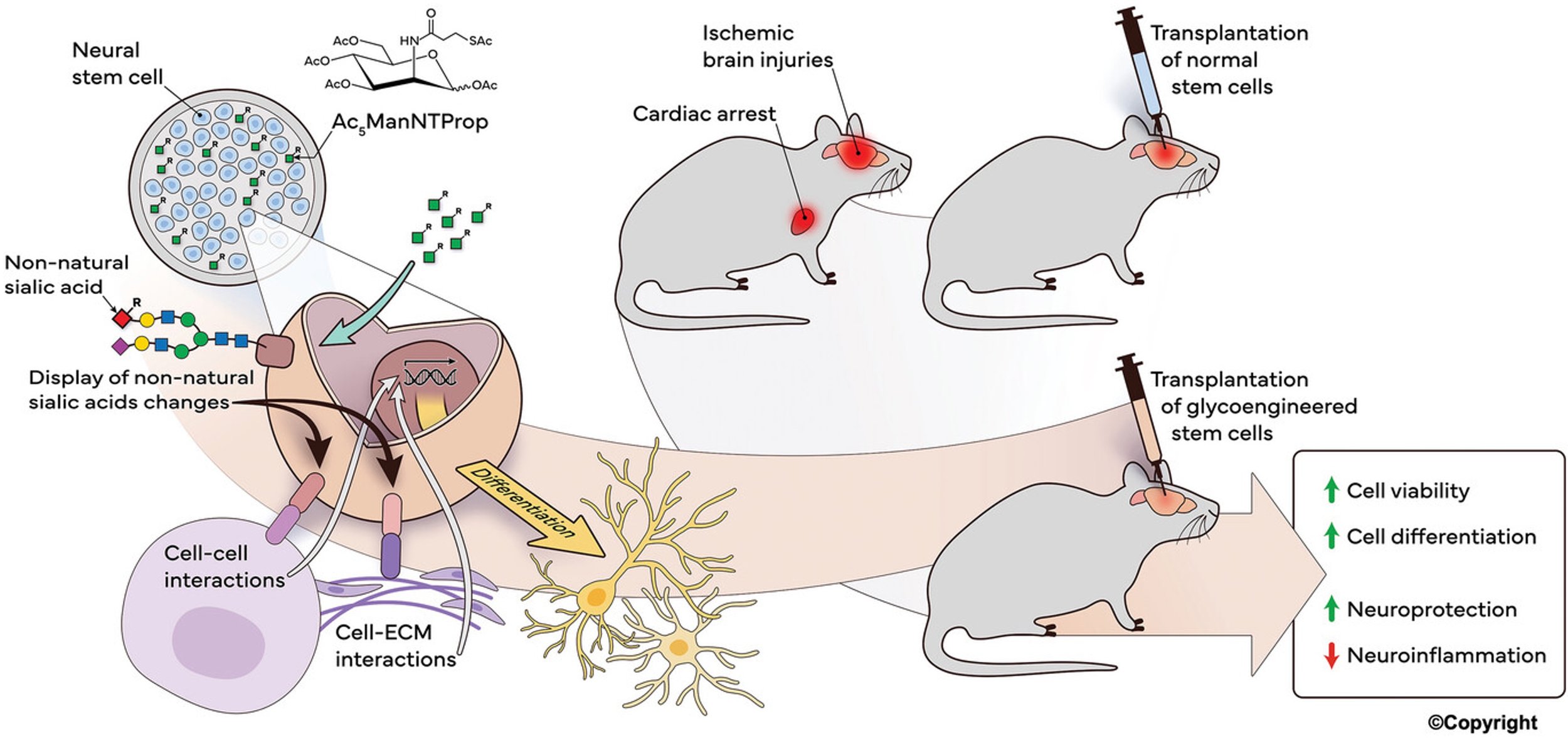
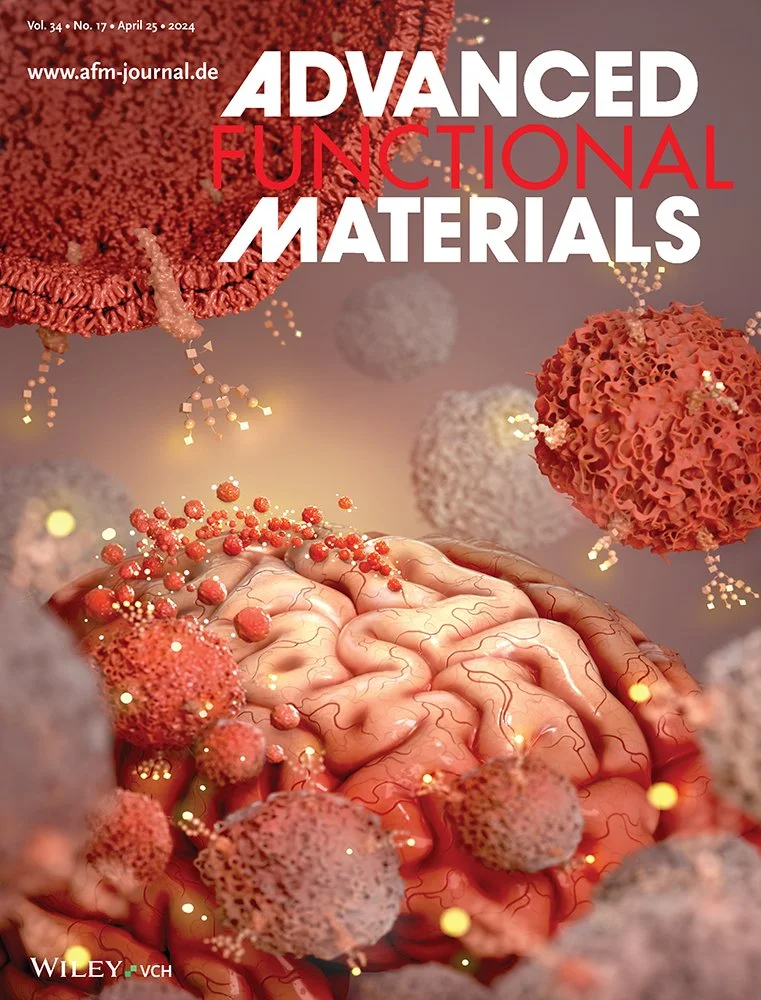
J. Du, X. Liu, S. Marasini, Z. Wang, K. Dammen-Brower, K. J. Yarema, X. Jia, Metabolically Glycoengineered Neural Stem Cells Boost Neural Repair After Cardiac Arrest. Adv. Funct. Mater. 2024, 34, 2309866. https://doi.org/10.1002/adfm.202309866 Front Cover
Structure-activity relationships of ManNAc Analogs for Optimized Neural Repair
We compare MGE analogs to define how subtle chemical differences modulate human neural stem cell behavior and enhance their reparative capacity. Our lead analog, TProp, consistently increased cell adhesion, activated pro-repair signaling pathways, and promoted neuronal differentiation, supporting improved stem cell survival and integration after brain injury. In contrast, a related control compound elicited a distinct cellular response, suggesting potential utility in targeting specific neurological conditions. Together, this work demonstrates how precise tuning of cell-surface glycosylation can be used to direct stem cell function in targeted and unexpected ways.
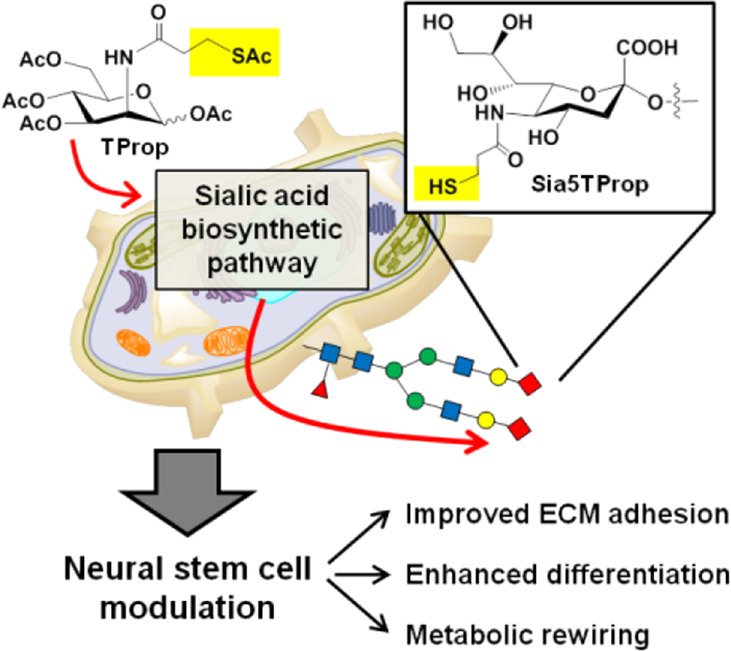
Dammen-Brower K, Arbogast O, Zhu S, Qiu C, Zhang C, Khare P, Le A, Jia X*, Yarema KJ*. Examining Structure-activity Relationships of ManNAc Analogs used in the Metabolic Glycoengineering of Human Neural Stem Cells. Biomater Adv. 2025 Apr;169:214144. doi: 10.1016/j.bioadv.2024.214144. Epub 2024 Dec 7. PMID: 39754871
Schwann Cell Differentiation Improvement From MGE-dASCs
MGE is used to accelerate Schwann cell differentiation from human adipose-derived stem cells (dASCs). By remodeling cell-surface glycans, we enhance adhesion-dependent signaling, helping these cells adopt a Schwann-like phenotype faster and more stably. Our optimized dASCs show increased myelination potential in vitro and provide stronger support for axonal growth, with upregulated SC protein S100β and p75NGFR expression and elevated the neurotrophic factors nerve growth factor beta (NGFβ) and glial cell-line-derived neurotrophic factor (GDNF).Notably, a differentiation protocol that previously required 14 days can now achieve comparable Schwann-like characteristics in 2 days with MGE.
Du, J., Wang, Z., Liu, X., Hu, C., Yarema, K. J., & Jia, X. (2023). Improving Schwann Cell Differentiation from Human Adipose Stem Cells with Metabolic Glycoengineering. Cells, 12(8), 1190. https://doi.org/10.3390/cells12081190
Glycoengineered Human Neural Stem Cells for Enhanced Adhesion
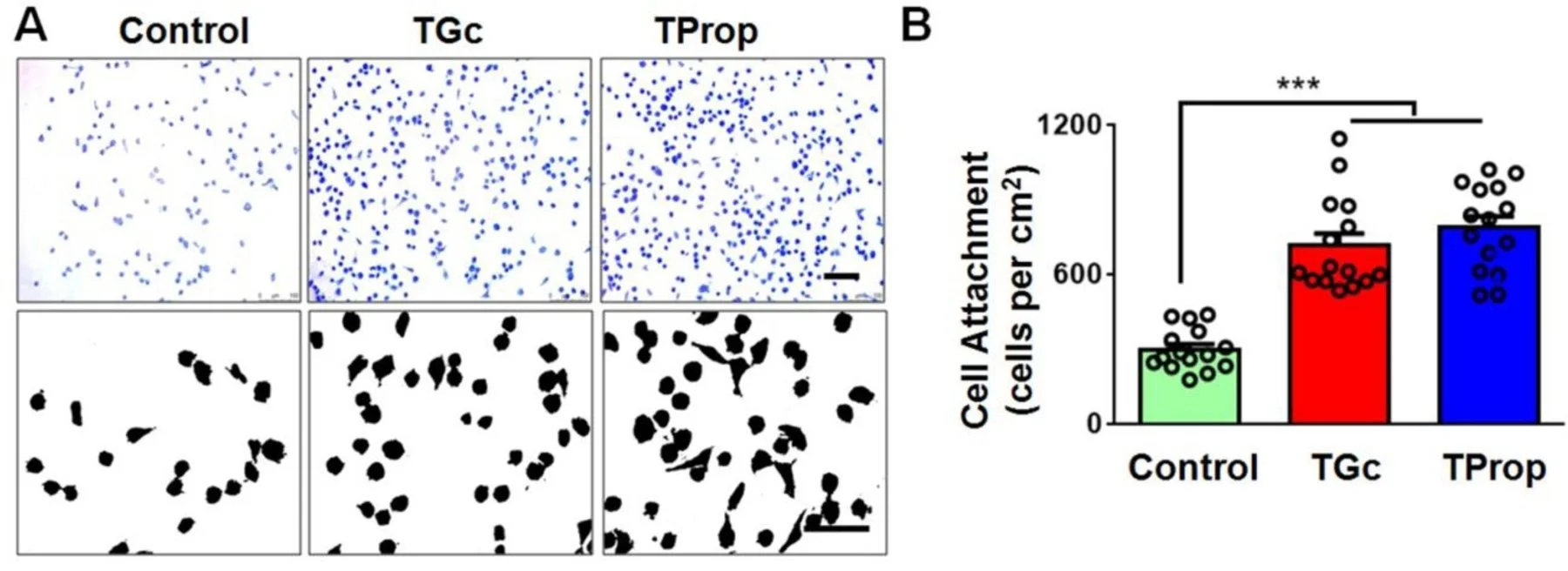
Metabolic glycoengineering (MGE) is being used to enhance the survival and integration of human neural stem cells through modification of their cell-surface glycans. In this work, human neural stem cells are treated with TProp which is metabolically incorporated into sialic acids and increases adhesive interactions with laminin-rich matrices characteristic of injured neural tissue. This glycan remodeling upregulates key adhesion receptors, including integrin α6β1, and strengthens focal adhesion signaling, leading to improved cell spreading and pro-regenerative behavior while preserving differentiation capacity. By integrating glycan engineering with stem cell biology, we aim to develop neural stem cell therapies with enhanced engraftment and reparative potential for nerve and brain injury.
Du, J., Wang, Z., Liu, X., Hu, C., Yarema, K. J., & Jia, X. (2023). Improving Schwann Cell Differentiation from Human Adipose Stem Cells with Metabolic Glycoengineering. Cells, 12(8), 1190. https://doi.org/10.3390/cells12081190
Thiol‑Modified ManNAc Analogs Reshape Neural Stem Cell Surface Glycans
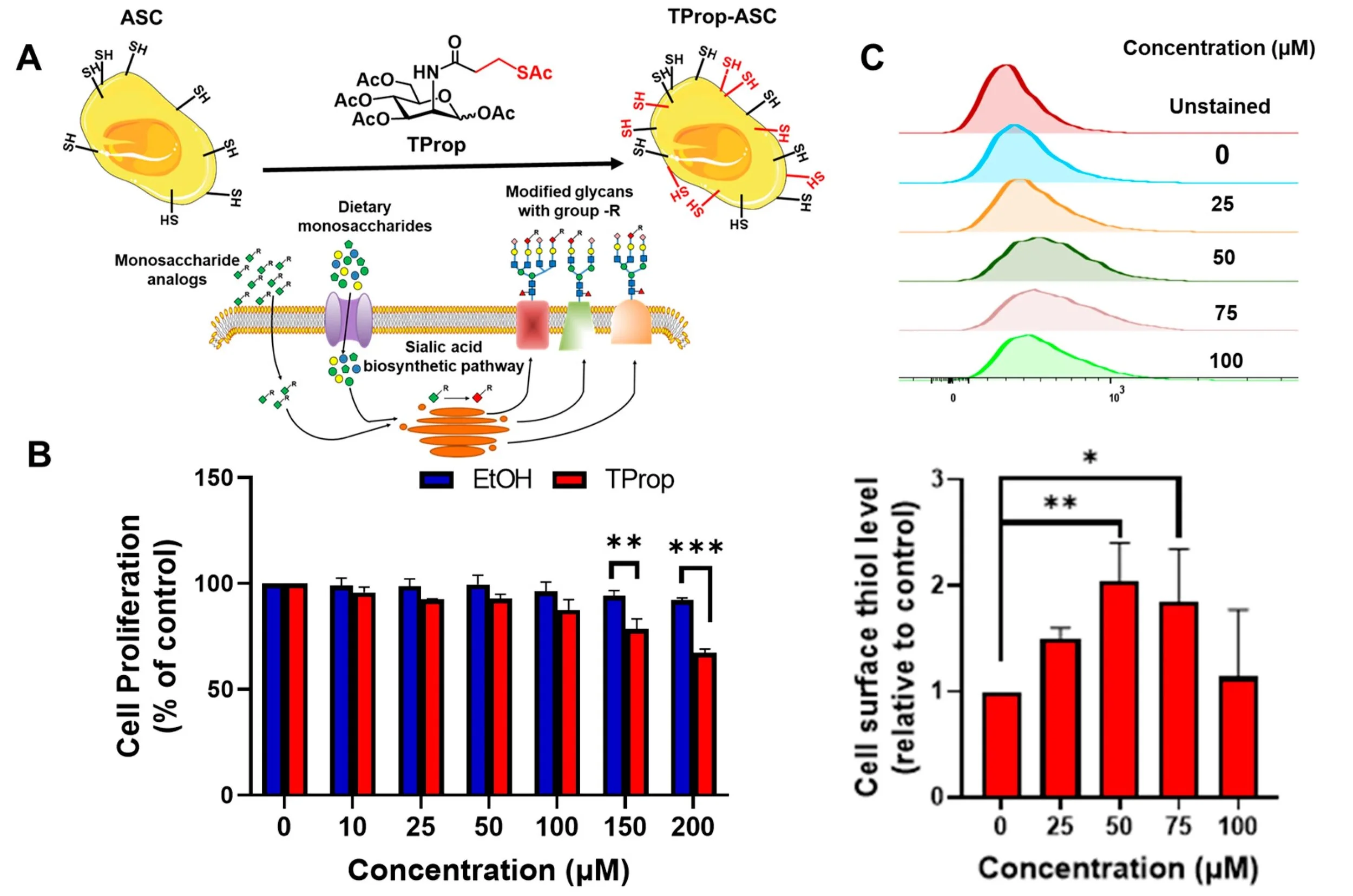
Novel thiol-modified ManNAc sugar analogs that expand the metabolic glycoengineering (MGE) applications of Ac₅ManNTGc, a non-natural monosaccharide that metabolically incorporates thio-glycolyl-modified sialic acid into human glycoconjugates.. The thiol-modified ManNAc analogs Ac5ManNTProp and Ac5ManNTBut were demonstrated to be efficiently incorporated into the glycans of human neural and adipose stem cells. Upon incorporation, Wnt-associated signaling was enhanced, neuronal differentiation of human neural stem cells (hNSCs) was promoted, and adipogenic differentiation of human adipose-derived stem cells (hASCs) was potently suppressed without impairment of Schwann cell–like glial differentiation. These findings indicate that thiolated ManNAc analogs with extended N-acyl linkers can be leveraged as scaffold-independent metabolic glycoengineering tools for the selective direction of human stem cell fate in regenerative medicine applications.
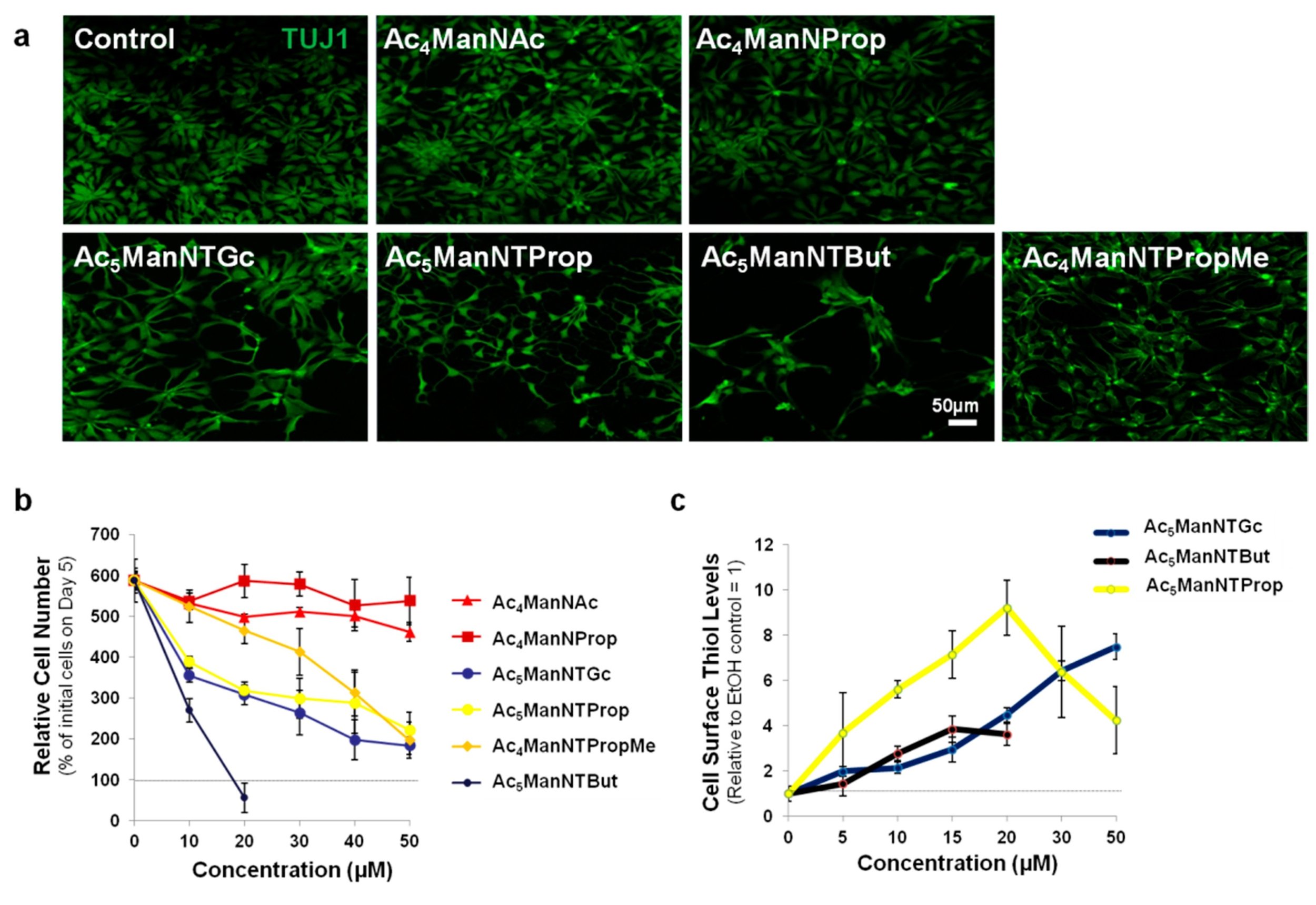
Figure: Metabolic glycoengineering with thiol‑modified ManNAc analogs alters human neural stem cell morphology, proliferation, and cell‑surface thiol display. TUJ1 staining shows morphology changes across analogs (a), analog concentrations affect cell viability (b), and elevate surface thiol levels most strongly with Ac5ManNTProp (c).
Du J, Agatemor C, Saeui CT, Bhattacharya R, Jia X*, Yarema KJ*. Glycoengineering Human Neural and Adipose Stem Cells with Novel Thiol-Modified N-Acetylmannosamine (ManNAc) Analogs. 2021 Feb 12;10(2):377. doi: 10.3390/cells10020377.PMID: 33673061