Cardiac Arrest & Therapeutic Hypothermia
Characterizing the Degrees of Neurological Injuries to the Brain
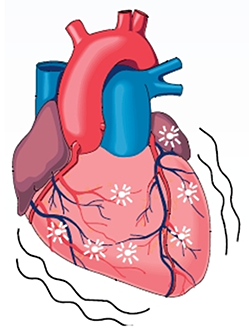
Cardiac Arrest (CA) is a leading cause of death in the United States and the world. It causes 460,000 sudden cardiac deaths in the U.S. annually and 17 million worldwide. Despite the advances in resuscitation techniques, the survival rate is still very low: only two to nine percent for patients following out-of-hospital arrest.
Poor functional recovery outcomes, such as coma, are prevalent among survivors, bringing a heavy load to the whole society. Neurological complications are the leading cause of mortality. Hypothermia has been proven to improve the neurological recovery outcomes from CA and early reperfusion in both animal models and preliminary human clinical trials. Yet, hypothermia is still underused now.
Our group focuses on novel animal protocol design and new algorithm development for characterizing the degrees of neurological injuries to the brain and the effect of therapeutic hypothermia on the post-cardiac-arrest resuscitation.
Electroencephalogram (EEG)
Evoked Potential (EP)
Spikes (cortical and from other brain structures)
Our globally ischemic CA experiments include models with different durations of CA (5-min, 7-min and 9-min). On the other hand, we also compare the different effects of conventional hypothermia and immediate hypothermia on post-resuscitation neurological recovery.
Awards and Recognition
Finalist of Student Paper Competition Award at the 35th Annual International Conference of the IEEE Engineering in Medicine and Biology Society (IEEE EMBC), 2013 (as sponsor Faculty and corresponding author)
Highlight as a significant advance based on animal research at the 65th American Academy of Neurology (AAN) Annual Meeting, 2013
Best Presentation Winner for Clinicians in the 2nd Annual Safer Symposium in Johns Hopkins Bayview Medical Center, 2010
Finalist of Research Citation Award of the Society of Critical Care Medicine, 2008
American Heart Association (AHA) CPCC Junior Investigator travel award, 2007
Selected Presentation for the Press Book of The 36th Annual Meeting of the Society for Neuroscience, 2006
Guest Editor
International Journal of Molecular Sciences (Impact Factor – 2.464, 2012): Special issue on Neurological Injuries’ Monitoring, Tracking and Treatment
Publications
-
*Corresponding author
He J, Lu H, Young L, Deng R, Callow D, Tong S, Jia X*. Real-time quantitative monitoring of cerebral blood flow by laser speckle contrast imaging after cardiac arrest with targeted temperature management. Journal of Cerebral Blood Flow and Metabolism. 2017 Jan 1:271678X17748787. doi: 10.1177/0271678X17748787. [Epub ahead of print] PMID: 29283290
Simard JM*, Jia X* and Gerzanich V. Pharmacological Induced Target Temperature Management after Cardiac arrest: the capsaicinoids. Neural Regen Res. 2017 12(10):1623-1624 PMID: 29171426
Choudhary RC, Jia X*. Hypothalamic or Extra-hypothalamic Modulation and Target Temperature Management after Brain Injury. Therapeutic Hypothermia and Temperature Management 2017 Sep;7(3):125-133. doi: 10.1089/ther.2017.0003. Epub 2017 May 3. PMID: 28467285
Wang X, Chaudhry SA, Hou W, Jia X*. Developing and Evaluating a Flexible Wireless microcoil array based Integrated Interface for Epidural Cortical Stimulation.Int J Mol Sci. 2017 Feb 5;18(2). pii: E335. doi: 10.3390/ijms18020335. PMID:28165427
Jones S, Schwartzbauer G, Jia X*. Brain Monitoring in Critically Neurologically Impaired Patients. Int J Mol Sci. 2016 Dec 27;18(1). pii: E43. doi: 10.3390/ijms18010043 PMID: 28035993
Cui D, Shang H, Young L, Zhang X, Jiang W, Jia X*. Cardiac arrest triggers hippocampal neuronal death through autophagic and apoptotic pathways. Scientific Reports. 2016 6:27642 DOI: 10.1038/srep27642 PMID: 27273382
Deng R, Xiong W, Jia X. Electrophysiological Monitoring of Brain Injury and Recovery after Cardiac Arrest. Int J Mol Sci. 2015 Oct 30;16(11):25999-6018. doi: 10.3390/ijms161125938 PMID: 26528970
Choi YS, Jia X. Information-theoretical Quantifier of Brain Rhythm Based on Data-driven Multiscale Representation. Biomed Research International. 2015;2015:946201. Epub 2015 Nov 12. PMID: 26640802
Karapetkova M, Koenig MA, Jia X*. Early Prognostication Markers in Cardiac Arrest Patients Treated with Hypothermia. European Journal of Neurology. 2015 Jul 31. doi: 10.1111/ene.12803. [Epub ahead of print] PMID: 26228521
Deng R, Koenig MA, Young LM, Jia X*. Early Quantitative Gamma-Band EEG Marker is Associated with Outcomes after Cardiac Arrest and Targeted Temperature Management. Neurocritical Care. 2015 Oct;23(2):262-73. doi: 10.1007/s12028-015-0157-2. [Epub 2015 Jul 1] PMID: 26130405
Chen C, Maybhate A, Israel D, Thakor NV, Jia X*. Analysis of Granger Causality for Assessment of Thalamocortical Functional Connectivity. IEEE Trans Neural Syst Rehabil Eng.2013 Sep;21(5):725-33. doi: 10.1109/TNSRE.2013.2271246. Epub 2013 Jul 10 PMID: 23864221
Jia X*, Kowalski RG, Sciubba DM, Geocadin RG. Critical Care of Traumatic Spinal Cord Injury. J Intensive Care Med. 2013 Jan-Feb;28(1):12-23. doi: 10.1177/0885066611403270. Epub 2011 Apr 11. PMID: 21482574
Kortelainen J, Jia X, Seppänen T, Thakor NV. Increased electroencephalographic gamma activity reveals awakening from isoflurane anaesthesia in rats. British Journal of Anaesthesia. 2012 Nov;109(5):782-9 doi: 10.1093/bja/aes265. Epub 2012 Aug 19 PMID: 22907339
Zhang D, Jia X, Ding H. The effect of anesthetic concentration on burst-suppression of the EEG in rats. Journal of Biomedical Engineering (Sheng Wu Yi Xue Gong Cheng Xue Za Zhi). 2012 Apr;29(2):223-8, 232. PMID: 22616162
Madhok J, Wu D, Xiong W, Geocadin RG, Jia X*. Hypothermia amplifies somatosensory evoked potentials in uninjured rats. J Neurosurg Anesthesiol. 2012 Jul;24(3):197-202 Equb 2012 Mar 20 PMID: 22441433
Wu D, Xiong W, Jia X, Geocadin RG, Thakor NV. Short- and Long-latency Somatosensory Neuronal Responses Reveal Selective Brain Injury and Effect of Hypothermia in Global Hypoxic-Ischemia. Journal of Neurophysiology 2012 Feb;107(4):1164-71. Epub 2011 Dec 7 PMID: 22157111
Ma Y, Hu Y, Valentin N, Geocadin R, Thakor NV, Jia X*. Time Jitter of Somatosensory Evoked Potentials in Recovery from Hypoxic-ischemic Brain Injury. Journal of Neuroscience Methods 2011 Oct 15;201(2):355-360. Epub 2011 Aug 22. PMID:21878352
Wu D, Anastassios B, Xiong W, Madhok J, Jia X, Thakor NV. Study of the origins of short- and long-latency SSEP during recovery from brain ischemia in a rat model. Neuroscience Letters 2010 Nov 26;485(3):157-61. Epub 2010 Sep 21 PMID: 20816917
Madhok J, Maybhate A, Xiong W, Geocadin RG, Jia X*, Thakor NV*. Quantitative Assessment of Somatosensory Evoked Potentials after Cardiac Arrest in Rats: Prognostication of Functional Outcomes. Critical Care Medicine 2010 Aug;38(8):1709-17. Epub 2010 Jun 3 PMID: 20526197 Highlighted in [Editorials] by Young GB. Promising prognostic potentials: perhaps. Crit Care Med. 2010 Aug;38(8):1753. doi: 10.1097/CCM.0b013e3181e8788c.
Choi Y, Koenig MA, Jia X, Thakor NV. Quantifying Time-varying Multiunit Neural Activity using Entropy based Measures. IEEE Tran. Biomedical Eng 2010 Nov 57(11):2771-7. May 10. [Epub ahead of print] PMID: 20460201
Xiong W, Koenig M, Madhok J, Jia X, Puttgen HA, Thakor NV, Geocadin RG. Evolution of Somatosensory Evoked Potentials after Cardiac Arrest Induced Hypoxic-Ischemic Injury. Resuscitation 2010 Jul;81(7):893-7. Epub 2010 Apr 24. PMID: 20418008Highlighted in [Editorials] by Young GB. Somatosensory evoked potentials after cardiac arrest: a stimulus for investigation.Resuscitation. 2010 Jul;81(7):784-5. doi: 10.1016/j.resuscitation.2010.03.032. Epub 2010 Apr 24.
Zhang D, Jia X, Ding H, Ye D, and Thakor NV. Application of Tsallis Entropy to EEG: Quantifying the Presence of Burst Suppression after Asphyxial Cardiac Arrest in Rats. IEEE Tran. Biomedical Eng 2010 57 (4): 867 – 874 Epub 2009 Aug 18. PMID: 19695982
Kang X, Jia X, Geocadin RG, Thakor NV, Maybhate A. Multi-scale entropy analysis for assessment of post-cardiac arrest recovery under hypothermia. IEEE Tran. Biomedical Eng 2009 April 50 (4):1023-31 PMID: 19174339
Koenig MA, Jia X, Kang X, Velasquez A, Thakor NV, Geocadin RG. Intraventrcular Orexin-A Improves Arousal and EEG Entropy in Rats after Cardiac Arrest. Brain Res. 2009 Feb 19;1255:153-61. Epub 2008 Dec 16. PMID: 19111527
Jia X*, Koenig MA, Venkatraman A, Thakor NV, Geocadin RG. Post-cardiac arrest temperature manipulation alters early EEG bursting in rats. Resuscitation 2008 Sep; 78, (3):367-373 PMID: 18597914
Shin HC, Jia X, Nickl R, Geocadin RG and Thakor NV. A Subband-based Information Measure of EEG During Brain Injury and Recovery After Cardiac Arrest, IEEE Tran. Biomedical Eng 2008 Aug;55(8):1985-90PMID: 18632361 Highlighted in Journal Cover Illustration
Geocadin RG, Koenig MA, Jia X, Stevens RD, Peberdy MA. Management of brain injury after resuscitation from cardiac arrest. Neurol Clin 2008 May 26 (2) 487-506 PMID: 18514823
Jia X*, Koenig MA, Nickl R, Zhen G, Thakor NV, Geocadin RG. Early Electrophysiologic Markers Predict Functional Outcome Associated with Temperature Manipulation after Cardiac Arrest in Rats. Critical Care Medicine 2008; 36 (6):1909-16 PMID:18496359 Highlighted in [Editorials] by Tempelhoff, René MD; Yoder, Jeffrey MD. Monitoring the brain: Lack of tools or lack of will? Critical Care Medicine 2008; 36 (6):1983-1984
Jia X*, Koenig MA, Shin HC, Zhen G, Pardo CA, Hanley DF, Thakor NV, Geocadin RG. Improving neurological outcomes post-cardiac arrest in a rat model: Immediate hypothermia and quantitative EEG monitoring. Resuscitation, 2008 March 76(3), 431-442 PMID:17936492
Murari K, Li N, Rege A, Jia X, All A, Thakor NV. Contrast Enhanced Imaging of Cerebral Vasculature with Laser Speckle. Applied Optics. 2007 Aug 1, 46(22), 5340-5346 PMID: 17676149
Jia X*, Koenig MA, Shin HC, Zhen G, Yamashita S, Thakor NV, Geocadin RG. Quantitative EEG and Neurological Recovery after therapeutic Hypothermia of Asphyxial Cardiac Arrest in Rats. Brain Research, 2006 September 21, 1111(1) 166-175 PMID:16919609
Shin HC, Tong S, Yamashita S, Jia X, Geocadin RG, Thakor NV, Quantitative EEG and Effect of Hypothermia on Brain Recovery After Cardiac Arrest. IEEE Trans. on Biomedical Eng, 2006 Jun, 53 (6): 1016-1023 PMID: 16761828
Thakor NV, Jia X, Geocadin RG. Monitoring Neurological Injury by qEEG. In Tong S, Thakor NV (eds): Quantitative EEG Analysis Methods and the Applications. Artech House, 2009.
He J, Lu H, Young L, Deng R, Callow D, Tong S, Jia X*. Real-time quantitative monitoring of cerebral blood flow by laser speckle contrast imaging after cardiac arrest with targeted temperature management. Journal of Cerebral Blood Flow and Metabolism. 2017 Jan 1:271678X17748787. doi: 10.1177/0271678X17748787. [Epub ahead of print] PMID: 29283290
Simard JM*, Jia X* and Gerzanich V. Pharmacological Induced Target Temperature Management after Cardiac arrest: the capsaicinoids. Neural Regen Res. 2017 12(10):1623-1624 PMID: 29171426
Choudhary RC, Jia X*. Hypothalamic or Extra-hypothalamic Modulation and Target Temperature Management after Brain Injury. Therapeutic Hypothermia and Temperature Management2017 Sep;7(3):125-133. doi: 10.1089/ther.2017.0003. Epub 2017 May 3. PMID: 28467285
Wang X, Chaudhry SA, Hou W, Jia X*. Developing and Evaluating a Flexible Wireless microcoil array based Integrated Interface for Epidural Cortical Stimulation.Int J Mol Sci. 2017 Feb 5;18(2). pii: E335. doi: 10.3390/ijms18020335. PMID:28165427
Jones S, Schwartzbauer G, Jia X*. Brain Monitoring in Critically Neurologically Impaired Patients. Int J Mol Sci. 2016 Dec 27;18(1). pii: E43. doi: 10.3390/ijms18010043 PMID: 28035993
-
Wang X, Hou W, Chaudhry SA, Jia X*. Flexible Wireless Microcoil Array Based Portable Integrated Interface for Cortical Neural Stimulation. The Sixth International Conference of Rehabilitation Medical Engineering, 20 -21 May, 2017, Shanghai, China Platform Section
Young LM, Deng R, Koenig MA, and Jia X*. Early Quantitative Somatosensory Evoked Potentials Markers after Cardiac Arrest. International Stroke Conference 2017. Feb. 22–24, 2017. Houston, TX
Young LM, Choudhary R, Jia X*. Multimodel Quantitative Analyses of Somatosensory Evoked Potentials After Cardiac Arrest with Graded Hypothermia. 38th Annual International Conference of the IEEE Engineering in Medicine and Biology Society. Aug 17-20, 2016, Orlando, Florida DOI: 10.1109/EMBC.2016.7591079. PMID:28268685
He J, Young LM, Jia X*. Dihydrocapsaicin Induced Hypothermia after Asphyxial Cardiac Arrest in Rats. 38th Annual International Conference of the IEEE Engineering in Medicine and Biology Society. Aug 17-20, 2016, Orlando, Florida DOI: 10.1109/EMBC.2016.7591082 PMID: 28268688
Young L, Deng R, Jia X*. Somatosensory evoked potentials are associated with post-resuscitation recovery with hypothermia. Crit Care Med. 2015 Dec;43(12 Suppl 1):42. PUBMED Society of Critical Care Medicine’s (SCCM) 45th Critical Care Annual Congress, February 20-24, 2016, Orlando, Florida, USA
Deng R, Young L, Jia X*. Early Quantitative Somatosensory Evoked Potentials are Associated with Neurological Outcomes after Cardiac Arrest and Therapeutic Hypothermia. XXII World Congress of Neurology (WCN 2015), October 31 – November 5, 2015, Santiago Chile
Deng R, Ma Y, Young LM, Jia X*. Effects of Transcranial Direct Current Stimulation on Somatosensory Evoked Potentials in Uninjured Rats. Biomedical Engineering Society (BMES) Annual Meeting, October 7-10, 2015, Tampa, Florida.
Deng R, Young L, Jia X*. Quantitative EEG Markers in Severe Post-resuscitation Brain Injury with Therapeutic Hypothermia. 37th Annual International Conference of the IEEE Engineering in Medicine and Biology Society. August 25-29, 2015, Milano, Italy PMID: 26737805
He J, Lu H, Deng R, Young L, Tong S, Jia X*. Real-time monitoring of cerebral blood flow by laser speckle contrast imaging after cardiac arrest in rat. 37th Annual International Conference of the IEEE Engineering in Medicine and Biology Society. August 25-29, 2015, Milano, Italy PMID: 26737896
Deng R, Young L, Jia X. The subband-based EEG marker and neurological outcome with temperature manipulation after cardiac arrest. The XXVIIth International Symposium on Cerebral Blood Flow, Metabolism and Function and the XIIth International Conference on Quantification of Brain Function with PET, June 27–30, 2015, Vancouver, Canada.
Chen C, Maybhate A, Cai H, Jia X. Electrophysiological Change In Response To Temperature Management. The 5th International hypothermia Symposium, Sept 7-10, 2014, Edinburgh, UK Platform Section
X Jia, C Chen, H Cai, A Maybhate, G Zhen. The Effect of Temperature Modulation on Neuron Spike Activity in Thalamus and Cortex in Rats. The 43rd Critical Care Congress of the Society of Critical Care Medicine, January 9- 13, 2014 San Francisco, CA, Critical Care Medicine 41 (12), A41
Chen C, Maybhate A, H Cai, Jia X. Temperature Modulates the Neuronal Response in the Thalamus and the Cortex in Rats. XXIst World Congress of Neurology (WCN 2013). Sept 21-26, 2013, Vienna, Austria Platform Section
Chen C, Maybhate A, Thakor NV, Jia X. Effect of Hypothermia on Cortical and Thalamic Signals in Anesthetized Rats. 35th Annual International Conference of the IEEE Engineering in Medicine and Biology Society (EMBC'13) in conjunction with 52nd Annual Conference of Japanese Society for Medical and Biological Engineering (JSMBE). July 3-7, 2013, Osaka, Japan. PMID: 24111185
Shen K, Chen Y, Sun Y, Chen C, Maybhate A, Ning N, Xu Z, Jia X, Thakor N. Temperature Dependence of Electrophysiological Recordings. Minisymposia. 35th Annual International Conference of the IEEE Engineering in Medicine and Biology Society (EMBC'13) in conjunction with 52nd Annual Conference of Japanese Society for Medical and Biological Engineering (JSMBE). July 3-7, 2013, Osaka, Japan. Platform Section IEEE EMBS
Maybhate A, Chen C, Akbari Y, Sherman DL, Shen K, Jia X, Thakor NV. Band Specific Changes in Thalamocortical Synchrony in Field Potentials after Cardiac Arrest Induced Global Hypoxia. 35th Annual International Conference of the IEEE Engineering in Medicine and Biology Society (EMBC'13) in conjunction with 52nd Annual Conference of Japanese Society for Medical and Biological Engineering (JSMBE). July 3-7, 2013, Osaka, Japan. PMID: 24111384
Zhen G, Endres C, Jia X *. Cerebral glucose metabolism with therapeutic hypothermia after cardiac arrest. The XXVIth International Symposium on Cerebral Blood Flow, Metabolism and Function & XIth International Conference on Quantification of Brain Function with PET, May 20 - 23, 2013, Shanghai, China.
LI C, Jia X, LI J, LIU S, XING Y. Phosphorylated tau[S262] in hippocampus increases in isoflurane-induced cognitive deficits of APP695 mice. The 11th international conference on Alzheimer’s and Parkinson’s Diseases. Florence, Italy, March 6-10, 2013
Jia X, Buitrago Blanco MM, Sharma K, Chen C, Payton A, Thakor N, Huganir R, Geocadin R. Early Synaptic Composition Changes after Global Cerebral Ischemia. 65th American Academy of Neurology (AAN) annual meeting, March 16–23, 2013 San Diego, California
Jia X, Tandri H, Thakor N, Geocadin R. Novel Transnasal Cooling Using High Flow Air for Brain Directed Therapeutic Hypothermia. 42nd Critical Care Medicine Annual congress, January 19-23, 2013, San Juan, Puerto Rico
Akbari Y, Maybhate A, Chen C, Greenwald E, Orellana J, Liang L, Payton A, Thakor N, Geocadin R, Jia X. Enhanced Coma Recovery after Cardiac Arrest in a Rat Model using Orexin-A 42nd Critical Care Medicine Annual congress, January 19-23, 2013, San Juan, Puerto Rico
Maybhate A, Chen C, Thakor N, Jia X. Effect of Hypothermia on the Thalamocortical Function in the Rat Model. The 14th annual ACCM Research Day pp111, Dec 10-11, 2012 JHU, Baltimore, MD
Akbari Y, Maybhate A, Chen C, Liang L, Pashai N, Greenwald E, Jia X, Thakor N, Geocadin R. Orexin-A Enhances Arousal from Post-Cardiac Arrest Coma in a Rodent Model. The 14th annual ACCM Research Day pp42, Dec 10-11, 2012 JHU, Baltimore, MD
Chen C, Maybhate A, Thakor N, Geocadin R, Jia X. The 14th annual ACCM Research Day pp106, Dec 10-11, 2012 JHU, Baltimore, MD
Akbari Y, Maybhate A, Chen C, Greenwald E, Liang L, Buitrago-Blanco M, Jia X, Thakor N, Geocadin R. Orexin-A Improves Arousal From Post-Cardiac Arrest Coma in a Rodent Model. American Heart Association 2012 Scientific Sessions. Nov 3-7, 2012, Los Angeles, CA Platform Section
Akbari Y, Orellana J, Maybhate A, Greenwald E, Jia X, Thakor N, Geocadin R. Acceleration as a Quantitative Measure of Coma Arousal in Rodents after Cardiac Arrest. The Neurocritical Care Society 2012 Annual Meeting, October 4-7, 2012 Denver, CO
Akbari Y, Maybhate A, Chen C, Liang L, Pashai N, Greenwald E, Buitrago-Blanco M, Jia X, Thakor N, Geocadin R. Arousal from Post-Cardiac Arrest Coma Improves after Treatment with Orexin-A in a Rodent Model. the Neurocritical Care Society 2012 Annual Meeting, October 4-7, 2012 Denver, CO Platform Section
Maybhate A, Chen C, Thakor N, Jia X. Effect of Hypothermia on the Thalamocortical Function in the Rat Model. 34th Annual International Conference of the IEEE Engineering in Medicine and Biology Society (EMBC'12). Aug 28-Sept 1, 2012 San Diego, California. Conf Proc IEEE Eng Med Biol Soc. 2012 Aug; 2012: 4680-3. doi: 10.1109/EMBC.2012.6347011. PMID: 23366972
Kortelainen J, Väyrynen E, Jia X, Tapio Seppänen, Thakor N. EEG-based Detection of Awakening from Isoflurane Anesthesia in Rats. 34th Annual International Conference of the IEEE Engineering in Medicine and Biology Society (EMBC'12). Aug 28-Sept 1, 2012 San Diego, California. Conf Proc IEEE Eng Med Biol Soc. 2012 Aug; 2012: 4279-82. doi: 10.1109/EMBC.2012.6346912. PMID: 23366873
Xiong W, Koenig M, Jia X, Puttgen A, Thakor NV, Geocadin RG. Evolution of Somatosensory Evoked Potentials after Cardiac Arrest induced hypoxic-ischemic injury. 3nd Annual Safer Symposium in Johns Hopkins Bayview Medical Center, May 25, 2012 Baltimore, MD
Choi YS, Koenig MA, Jia X, Thakor NV. Multiresolution entropy measure for neuronal multiunit activity. 3nd Annual Safer Symposium in Johns Hopkins Bayview Medical Center, May 25, 2012 Baltimore, MD
Wu D, Bezerianos A, Sherman D, Jia X, Thakor N. Causal Interactions between Thalamic and Cortical LFPs following Hypoxic-ischemic Brain Injury. 3nd Annual Safer Symposium in Johns Hopkins Bayview Medical Center, May 25, 2012 Baltimore, MD
Jia X, Ma Y, Geocadin R, Thakor N. Temporal Evolution of Motor Evoked Potentials in Post Cardiac Arrest Rats. 2011 Biomedical Engineering Society (BMES) Annual Meeting, October 12-15, 2011, Hartford, Conn.
Ma Y, Hu Y, Valentin N, Geocadin R, Jia X*. Evaluate Post-resuscitation Functional outcome with Variance analysis of Somatosensory Evoked Potentials. 9th Annual Neurocritical Care Society Meeting, September 21-24, 2011, QC, Canada.
Wu D, Xiong W, Jia X*, Geocadin R, Thakor NV. Effects of therapeutic hypothermia on somatosensory neuronal responses following cardiac arrest. 9th Annual Neurocritical Care Society Meeting, September 21-24, 2011, QC, Canada.
Jia X*, Madhok J, Wu D, Geocadin R. EEG burst suppression and amplification of cortical somatosensory evoked potentials by induced Hypothermia in rats. The 4th International Hypothermia Symposium, 15 to 17 September 2011, Tokyo, Japan.
Li N, Thakor N, Jia X*. Cerebral Vascular Responses to Whole Body Mild Hypothermia by Laser Speckle Imaging in Rat. The 4thInternational Hypothermia Symposium, 15 to 17 September 2011, Tokyo, Japan.
Ma Y, Thakor N, Jia X. Statistical Model Applied in Motor Evoked Potentials Analysis. 33rd Annual International Conference of the IEEE Engineering in Medicine and Biology Society (EMBC '11). Aug 30-Sept 3, 2011. Boston, MA Conf Proc IEEE Eng Med Biol Soc. 2011;2011:2001-4. PMID: 22254727
Li N, Thakor N, Jia X. Laser Speckle Imaging Reveals Multi –Aspects of Cerebral Vascular Responses to Whole Body Mild Hypothermia in Rat. 33rd Annual International Conference of the IEEE Engineering in Medicine and Biology Society (EMBC '11). Aug 30-Sept 3, 2011. Boston, MA Conf Proc IEEE Eng Med Biol Soc. 2011;2011:2049-52 PMID: 22254739
Ma Y, Hu Y, Valentin N, Thakor N, Jia X. Variance analysis of Somatosensory Evoked Potentials and Functional Recovery after Cardiac Arrest. International Society of Heart research - North American Section Meeting ISHR-NAS 2011: Developing Novel Heart Failure Therapeutics. May 22-25, 2011. Philadelphia, PAJournal of Molecular and Cellular Cardiology 2011 May;51(3 Supple):S11 035
Wu D, Bezerianos A, Sherman D, Jia X, Thakor N. Increased Thalamocortical Interaction during immediate recovery from hypoxic-ischemic brain injury. 5th International IEEE EMBS Conference on Neural Engineering of the IEEE Engineering in Medicine and Biology Society, Cancun, Mexico, April 27 - May 1, 2011
Bezerianos A, Wu D, Xiong W, Jia X, Thakor N. Electrophysiological indices for the investigation of brain recovery mechanisms after acute hypoxia induced by cardiac arrest. Oxygen, 2011, DAVOS, Switzerland, January 8-12, 2011
Wu D, Modhok J, Choi Y, Jia X, Thakor NV. Discovery of Long-latency Somatosensory Evoked Potentials as a marker of Cardiac Arrest Induced Brain Injury. The 12th annual ACCM Research Day pp78, Dec 6, 2010 JHU, Baltimore, MD
Madhok J, Wu D, Xiong W, Geocadin RG, Jia X. Hypothermia induces EEG burst suppression and amplification of somatosensory evoked potentials in rats. The 12th annual ACCM Research Day pp74, Dec 6, 2010 JHU, Baltimore, MD
Wu D, Bezerianos A, Zhang H, Jia X, Thakor NV. Exploring high-frequency oscillation as a marker of brain ischemia using S-transform. The 12th annual ACCM Research Day pp89, Dec 6, 2010 JHU, Baltimore, MD
Jia X, Madhok J, Wu D, Xiong W, Geocadin RG. Hypothermia induces EEG burst suppression and amplification of somatosensory evoked potentials in rats. Neurocritical Care Society 8th Annual Meeting, September 15 - 18, 2010, San Francisco, California Neurocrit Care (2010) 13:S127 DOl 10.1007/812028-010-9426-2
Wu D, Bezerianos A, Zhang H, Jia X, Thakor NV. Exploring high-frequency oscillation as a marker of brain ischemia using S-transform. 32nd Annual International Conference of the IEEE Engineering in Medicine and Biology Society (EMBC), Aug 31 - Sept 4, 2010, Buenos Aires, Argentina Conf Proc IEEE Eng Med Biol Soc. 2010;1:6099-102. PMID: 21097133
Zhang D, Jia X, Ding H, Ye D, and Thakor NV. Burst Suppression EEG during Hypothermia and Rapid Rewarming in Isoflurane-anesthetized Rats. The 4th International Conference on Bioinformatics and Biomedical Engineering (iCBBE) , June 18 to 20, 2010, Chengdu, China
Valentin NS, Thakor NV, Jia X. Rodent injury models for Global Cerebral Ischemia and Septic Encephalopathy. 2nd Annual Safer Symposium in Johns Hopkins Bayview Medical Center, May 24, 2010 Baltimore, MD
Madhok J, Xiong W, Maybhate A, Geocadin RG, Thakor NV, Jia X. Early Indication of Neurological Outcomes after Cardiac Arrest Using Quantitative Somatosensory Evoked Potential Monitoring. 2nd Annual Safer Symposium in Johns Hopkins Bayview Medical Center, May 24, 2010 Baltimore, MD
Xiong W, Koenig M, Madhok J, Jia X, Puttgen A, Thakor NV, Geocadin RG. Evolution of Somatosensory Evoked Potentials in Post Cardiac Arrest Rats. 2nd Annual Safer Symposium in Johns Hopkins Bayview Medical Center, May 24, 2010 Baltimore, MD
Wu D, Modhok J, Choi Y, Jia X, Thakor NV. Discovery of Long-latency Somatosensory Evoked Potentials as a marker of Cardiac Arrest Induced Brain Injury. 26th Southern Biomedical Engineering Conference SBEC 2010, April 30 - May 2, 2010, College Park, Maryland, USA Intern. Fed. for Medical & Biological Engineering (IFMBE) Proceedings (Eds: Keith E. Herold, Jafar Vossoughi andWilliam E. Bentley), 2010, Volume 32, Part 6, 101-104, DOI: 10.1007/978-3-642-14998-6_27
Valentin NS, Thakor NV, Jia X. Rodent injury models for Global Cerebral Ischemia and Septic Encephalopathy. Johns Hopkins University Graduate Student Association Annual Poster Session. April 7th, 2010. Baltimore, Maryland
Madhok J, Xiong W, Maybhate A, Geocadin RG, Thakor NV, Jia X. Early Indication of Neurological Outcomes after Cardiac Arrest Using Quantitative Somatosensory Evoked Potential Monitoring. 39th Critical Care Congress Critical Care Medicine annual meeting, January 9-13, 2010, Miami Beach, Florida
Zhang D, Choi YS, Jai Madhok, Jia X, Koenig MA, Thakor NV. Neural Signals in Cortex and Thalamus during Brain Injury from Cardiac Arrest in Rats. The 11th annual ACCM Research Day pp61, Dec 14, 2009 JHU, Baltimore, MD
Madhok J, Xiong W, Maybhate A, Geocadin RG, Thakor NV, Jia X. Early Indication of Neurological Outcomes after Cardiac Arrest Using Quantitative Somatosensory Evoked Potential Monitoring. The 11th annual ACCM Research Day pp60, Dec 14, 2009 JHU, Baltimore, MD
Puttgen HA, Madhok J, Jia X, Maybhate A. A Slowly Expanding Intracranial Mass Causes A Threshold Change In Somatosensory Evoked Potentials. The 11th annual ACCM Research Day pp58, Dec 14, 2009 JHU, Baltimore, MD
Xiong W, Koenig M, Madhok J, Jia X, Puttgen A, Thakor NV, Geocadin RG. Evolution of Somatosensory Evoked Potentials in Post Cardiac Arrest Rats. The 11th annual ACCM Research Day pp29, Dec 50, 2009 JHU, Baltimore, MD
Jia X, Madhok J, Choi Y, Geocadin RG, Thakor NV. Neurological Recovery and Neural Spike Firing Rates with Therapeutic Hypothermia after Cardiac Arrest in Rats. 7th Annual Neurocritical Care Society Meeting, November 11 - 14, 2009, New Orleans, LAPlatform Section
Puttgen HA, Madhok J, Jia X, Maybhate A. A Slowly Expanding Intracranial Mass Causes A Threshold Change In Somatosensory Evoked Potentials. 7th Annual Neurocritical Care Society Meeting, November 11 - 14, 2009, New Orleans, LA
Xiong W, Koenig M, Jia X, Puttgen A, Thakor NV, Geocadin RG. Evolution of Somatosensory Evoked Potentials in Post-Hypoxic Cardiac Arrest Rats. 7th Annual Neurocritical Care Society Meeting, November 11 - 14, 2009, New Orleans, LA
Jia X, Koenig MA, Zhen G, Thakor NV, Geocadin RG. Early electrophysiologic markers of post-resuscitation functional outcome with therapeutic hypothermia. The 3rd international hypothermia symposium, Sep 2-5, 2009, Lund, Sweden Platform Section
Jia X, Choi Y, Madhok J, Geocadin RG, Thakor NV. Therapeutic hypothermia increased multiple neural spike firing rates after cardiac arrest in rats. The 3rd international hypothermia symposium, Sep 2-5, 2009, Lund, Sweden
Zhang D, Choi YS, Jai Madhok, Jia X, Koenig MA, Thakor NV. Neural Signals in Cortex and Thalamus during Brain Injury from Cardiac Arrest in Rats. The 31th Annual International Conference of the IEEE Engineering in Medicine and Biology Society (IEEE EMBC). September, 2-6, 2009 Minneapolis, Minnesota PMID: 19965064
Kang X, Koenig MA, Xiong W, Puttgen HA, Jia X, Geocadin RG, Thakor NV. Long-term assessment of post-cardiac-arrest neurological outcomes with somatosensory evoked potential in rats. The 31th Annual International Conference of the IEEE Engineering in Medicine and Biology Society (IEEE EMBC). September, 2-6, 2009 Minneapolis, Minnesota PMID: 19965151
Choi YS, Koenig MA, Jia X, Thakor NV. Multiresolution Complexity Measure for Neuronal Multiunit Activity. The 31th Annual International Conference of the IEEE Engineering in Medicine and Biology Society (IEEE EMBC). September, 2-6, 2009 Minneapolis, Minnesota PMID: 19964836
Jiang D, Wu W, Jia X, Qiu Y, Zhu Y, Thakor NV, Tong S. Scaling Exponents of EEG Are Related to the Temporal Process of the Therapeutic Hypothermia following Ischemic Brain Injury. The 31th Annual International Conference of the IEEE Engineering in Medicine and Biology Society (IEEE EMBC). September, 2-6, 2009 Minneapolis, Minnesota PMID: 19965150
Madhok J, Jia X, Choi YS, Zhang D, Thakor NV. Information theoretical assessment of neural spiking activity with temperature modulation. The 31th Annual International Conference of the IEEE Engineering in Medicine and Biology Society (IEEE EMBC). September, 2-6, 2009 Minneapolis, Minnesota PMID: 19965028
Li N, Murari K, Rege A, Miao P, Jia X, Thakor NV. Novel optical imaging reveals changes in cerebral blood flow and deoxy-hemoglobin in response to abnormal trigeminal activation. The 24th International Symposium on Cerebral Blood Flow, Metabolism, & Function, and the 9th International Conference on Quantification of Brain Function with PET (Brain’09 & BrainPET’09), June 29 -July 3, 2009, Chicago, IL
Choi YS, Jia X, Geocadin RG, Thakor NV. Data-driven information measure of EEG following Brain Recovery after Cardiac Arrest. International Society for Heart Research (ISHR) 2009 North American Section Meeting. May 26-29, 2009, Baltimore, MarylandJournal of Molecular and Cellular Cardiology 2009 May;46(5):S6 P17
Zhang D, Jia X, Ding H, Ye D, Thakor NV. Features of Burst-suppression EEG After Asphyxial Cardiac Arrest in Rats. The 4th International IEEE Engineering in Medicine and Biology Society (IEEE EMBS) Neural Engineering Conference, Platform Section April 29-May 2, 2009, Antalya, Turkey
Jia X, Zhen G, Tsai S, Koenig MA, Pardo CA, Thakor NV, Geocadin RG. Brain Cellular Response and Temperature manipulation after Cardiac Arrest Resuscitation in Rats. 38th Critical Care Congress 2008 Critical Care Medicine annual meeting, January 31 to February 4, 2009, Nashville, Tennessee Critical Care Medicine, 2008 Dec 36(12) Supplement: A144
Jia X, Koenig MA, Zhen G, Thakor NV, Geocadin RG. Early electrophysiologic markers predict post-resuscitation functional outcome with temperature manipulation. The 3rd Annual Bayview Research Symposium, Dec. 12, 2008 Baltimore, MD
Jia X, Tsai S, Zhen G, Thakor NV, Geocadin RG. Brain Cellular Response and Therapeutic Hypothermia after cardiac arrest in Rats. The 10th annual ACCM Research Day pp29, Dec 9, 2008 JHU, Baltimore, MD
Jia X, Koenig MA, Thakor NV, Geocadin RG. Unnormalized Quantitative EEG predicts functional outcome with therapeutic hypothermia after Cardiac Arrest in Rats. The 10th annual ACCM Research Day pp30, Dec 9, 2008 JHU, Baltimore, MD
Jia X, Geocadin RG and Thakor NV. Multiunit neural spike recording in free roaming Rats after cardiac arrest. The 10th annual ACCM Research Day pp80, Dec 9, 2008 JHU, Baltimore, MD
Choi YS, Jia X, and Thakor NV. Cortical and subcortical neural activity of ischemic brain injury and recovery following cardiac arrest. The 38th Annual Meeting of the Society for Neuroscience. Nov. 15–19, 2008 Washington, DC.
Kang X, Jia X, Geocadin RG, Thakor NV. EEG signal analysis during post-cardiac arrest recovery under therapeutic hypothermia. The 38th Annual Meeting of the Society for Neuroscience. Nov. 15–19, 2008 Washington, DC.
Jia X, Geocadin RG and Thakor NV. Multiple neural spike measurement with chronically implanted microelectrodes in free roaming Rats after cardiac arrest. The 38th Annual Meeting of the Society for Neuroscience. Platform Section Nov. 15–19, 2008 Washington, DC.
Koenig MA, Jia X, Kang X, Velasquez A, Thakor NV, and Geocadin RG. Orexin-A Improves Arousal and EEG Entropy in Rats after Cardiac Arrest. American Heart Association 2008 annual meeting. Nov 8-12 New Orleans, Louisiana. Circulation, Oct 2008; Vol: 118 Iss: 18 Supplement: S_1468 - 9.
Sherman DL, Jia X, Le NT, Hathi M, Thakor NV, Geocadin RG. Cerebral Health Index as a Measure of Neurological Recovery in an Asphyxial Cardiac Arrest Model. American Heart Association 2008 annual meeting. Nov 8-12 New Orleans, Louisiana. Circulation, Oct 2008; Vol: 118 Iss: 18 Supplement: S_1468.
Jia X, Tsai S, Zhen G, Velasquez A, Koenig MA, Pardo CA, Thakor NV, Geocadin RG. Microglial Activity and Therapeutic Hypothermia Post Cardiac Arrest Resuscitation in Rats. American Heart Association 2008 annual meeting. Nov 8-12 New Orleans, Louisiana.Circulation, Oct 2008; Vol: 118 Iss: 18 Supplement: S_1450 - 1.
Jia X, Tsai S, Zhen G, Velasquez A, Koenig MA, Pardo CA, Thakor NV, Geocadin RG. Brain Cellular Response and Therapeutic Hypothermia Post Cardiac Arrest Resuscitation in Rats. The 6th Annual Meeting of the Neurocritical Care Society, October 22-25, 2008 Miami, Florida Neurocritical Care, Humana Press Inc. ISSN 1541-6933 DOI 10.1007/s12028-008-9141-4, 2008 Vol 9: S156
Jia X, Thakor NV and Geocadin RG. Chronic multiple neural spike recording in free roaming rats after cardiac arrest. The 6th Annual Meeting of the Neurocritical Care Society, October 22-25, 2008 Miami, Florida Neurocritical Care Humana Press Inc. ISSN 1541-6933 DOI 10.1007/s12028-008-9141-4, 2008 Vol 9: S89
Kang X, Jia X, Maybhate A, Geocadin RG, Thakor NV. Multi-Scale Entropy analysis of EEG in post-cardiac arrest recovery with therapeutic hypothermia. The Biomedical Engineering Society (BMES) 2008 Annual Fall Meeting, October 2-4, St. Louis, MO.
Choi Y, Jia X, Geocadin RG and Thakor NV. Data-driven information measure of EEG following Brain Recovery after Cardiac Arrest. The Biomedical Engineering Society (BMES) 2008 Annual Fall Meeting, October 2-4, St. Louis, MO.
Jia X, Tsai S, Zhen G, Koenig MA, Pardo CA, Thakor NV, Geocadin RG. Brain Cellular Response and Therapeutic Hypothermia Post-resuscitation in Rats. Celebrating 50 Years of Critical Care in Johns Hopkins Bayview Medical Center Multidisciplinary Intensive Care Symposium, September 26, 2008 Baltimore, MD
Jia X, Thakor NV and Geocadin RG. Multiple neural spike measurement in free roaming Rats after cardiac arrest. Celebrating 50 Years of Critical Care in Johns Hopkins Bayview Medical Center Multidisciplinary Intensive Care Symposium, September 26, 2008 Baltimore, MD
Jia X, Koenig MA, Zhen G, Nickl RW, Thakor NV, Geocadin RG. Early electrophysiologic markers predict post-resuscitation functional outcome with temperature manipulation. Celebrating 50 Years of Critical Care in Johns Hopkins Bayview Medical Center Multidisciplinary Intensive Care Symposium, September 26, 2008 Baltimore, MD
Jia X, Koenig MA, Zhen G, Wang Y, Thakor NV, Geocadin RG. Unnormalized Quantitative EEG predicts benefit of therapeutic hypothermia after Cardiac Arrest in Rats. Celebrating 50 Years of Critical Care in Johns Hopkins Bayview Medical Center Multidisciplinary Intensive Care Symposium, September 26, 2008 Baltimore, MD
Lu Y, Jiang D, Jia X, Qiu Y, Zhu Y, Thakor NV, Tong S. Predict the Neurological Recovery under Hypothermia after Cardiac Arrest. Using C0 Complexity Measure of EEG signals. 30th Annual International Conference of the IEEE Engineering in Medicine and Biology Society (IEEE EMBC). August 20-24, 2008, Vancouver, British Columbia PMID: 19163118
Jia X, Koenig MA, Zhen G, Nickl R, Thakor NV, Geocadin RG. Unnormalized Quantitative EEG predicts the benefit of therapeutic hypothermia after Cardiac Arrest in Rats. International Society for Heart Research 2008 North American Section Meeting. June 17-20, 2008. Cincinnati, Ohio Journal of Molecular and Cellular Cardiology 2008 June;44(6):S56 P178
Kang X, Jia X, Maybhate A, Thakor NV. Neuro-protective effect of therapeutic hypothermia on neurological recovery post-cardiac arrest with multi-scale entropy analysis. 38th Neural Interfaces Coneference, June 16-18, 2008 Cleveland, Ohio
Koenig MA, Jia X, Nickl RW, Thakor NV, Geocadin RG. Intraventricular Injection of Orexin-A Elicits Earlier Arousal in Rats after Cardiac Arrest. 37th Critical Care Congress 2008 Critical Care Medicine annual meeting February 2 to 6, 2008, in Honolulu, Hawaii. Critical Care Medicine 2007 35 (12) suppl pp A102 384
Jia X, Koenig MA, Nickl RW, Zhen G, Wang Y, Thakor NV, Geocadin RG. Early Electrophysiologic Markers of Functional Outcome after Cardiac Arrest with Temperature Manipulation in Rats. 37th Critical Care Congress 2008 Critical Care Medicine annual meeting February 2 to 6, 2008, in Honolulu, Hawaii. Critical Care Medicine 2007 35 (12) suppl pp A91 346
Jia X, Koenig MA, Nickl RW, Zhen G, Wang Y, Thakor NV, Geocadin RG. Early electrophysiologic markers of functional outcome associate with temperature manipulation after cardiac arrest in rats. The 9th annual ACCM research day Dec 9, 2007 JHU, Baltimore, MD, USA pp 20
Jia X, Venkatramana V, Tsai S, Wang Y, Koenig MA, Thakor NV, Geocadin RG. Early EEG Bursting changes with temperature manipulation after Cardiac Arrest in Rats. The 9th annual ACCM research day Dec 9, 2007 JHU, Baltimore, MD, USA pp 21
Jia X, Koenig MA, Nickl RW, Zhen G, Wang Y, Hanley DF, Thakor NV, Geocadin RG. Electrophysiologic Monitoring Of Neurological Recovery with Temperature Manipulation after Cardiac Arrest in Rats. Platform Section at American Heart Association 2007 annual meeting. Nov 3-7, 2007 Orlando, Florida, USA CIRCULATION, 116 (16): 529-529 2408 Suppl. S OCT 16 2007 ISSN: 0009-7322
Jia X, Venkatramana V, Tsai S, Zhen G, Wang Y, Koenig MA, Thakor NV, Geocadin RG. Temperature Manipulation Alters Early EEG Bursting after Cardiac Arrest in Rats. Platform Section at The 5th Annual Meeting of the Neurocritical Care Society, Las Vegas, NV November 2-3, 2007 Neurocritical Care Humana Press Inc. ISSN 1541-6933 2007 DOI 10.1007/s12028-007-9013-3
Jia X, Koenig MA, Shin HC, Zhen G, Pardo CA, Hanley DF, Thakor NV, Geocadin RG. Enhancing therapeutic hypothermia after cardiac arrest with immediate initiation and neurophysiologic monitoring in a rodent model. The 5th Annual Meeting of the Neurocritical Care Society, Las Vegas, NV November 2-3, 2007. Neurocritical Care 2007 Proceedings pp201, Humana Press Inc. ISSN 1541-6933 2007 DOI 10.1007/s12028-007-9013-3
Jia X, Shin HC, Koenig MA, Zhen G, Hanley DF, Thakor NV, Geocadin RG. The effect of immediate hypothermia therapy on neurological recovery after cardiac arrest in rats. The 8th annual ACCM research day Dec 6, 2006 JHU, Baltimore, MD, USA pp 29
Jia X, Koenig MA, Shin HC, Zhen G, Thakor NV, Geocadin RG. Earlier initiation of therapeutic hypothermia increases neurological recovery after asphyxial cardiac arrest in rats. The 4th Annual Meeting of the Neurocritical Care Society, Platform Section Nov 4-5, 2006 Baltimore, MD, USA. Neurocritical Care Humana Press Inc. ISSN 1541-6933 2007 June 6 Volume 6, Number 3 pp 215 DOI 10.1007/s12028-007-0048-2
Shin HC, Jia X and Thakor NV. Effects of ischemic brain injury on thalamo-cortical and cortico-thalamic interaction: neural electrical perspectives. The 36th Annual Meeting of the Society for Neuroscience. October 14-18, 2006. Georgia, Atlanta, USA
Jia X, Shin HC, Koenig MA, Zhen G, Hanley DF, Thakor NV, Geocadin RG. The effect of immediate hypothermia therapy on neurological recovery after cardiac arrest in rats. Neuroscience 2006, the Society's 36th annual meeting. Press Book Part 2 Lay Language Summaries Section B: pp480-481
Shin HC, Tong S, Yamashita S, Jia X, Geocadin R and Thakor NV. Quantitative EEG Assessment of Brain Injury and Hypothermic Neuroprotection after Cardiac Arrest. Proc The 28th IEEE EMBS Annual International Conference, August 30-Sept. 3, 2006. New York City, New York Conf Proc IEEE Eng Med Biol Soc. 2006;1:6229-32. PMID: 17947182
Shin HC, Jia X and Thakor NV. Quantitative Analysis of Neural Electrical Activities in Thalamus and Cortex after Ischemic Brain Injury. Proc World Congress on medical physics and biomedical engineering 2006,Aug 27- Sep. 1, Seoul, Korea
Jia X, Koenig MA, Shin HC, Zhen G, Geocadin RG, Thakor NV. Detection and Monitoring of Brain Recovery after Therapeutic Hypothermia in a Post-cardiac Arrest Rodent Model: A Quantitative EEG Study. 3rd Annual Symposium of the American Heart Association Council on Basic Cardiovascular Sciences - Translation of Basic Insights Into Clinical Practice. Pp54, p156 Abstracts. Jul 31 - Aug 3, 2006 Keystone, Colorado P156. Circulation Research, 2006 September 1, 99 (5) E45
-
Brain Monitoring and Targeted temperature management in the Era of Digital Medicine (Invited).1st Summit of Chinese Basic and Translational Science Research on Stroke, June 22-23, 2017
Electrophysiological Change in Response to Temperature Management. The 5th International hypothermia Symposium, Sept 7-10, 2014, Edinburgh, UK
Neurophysiological monitoring and functional outcome with therapeutic hypothermia. (Invited) The Third International Conference of Rehabilitation Medical Engineering, Shanghai, China
Temperature Modulates the Neuronal Response in the Thalamus and the Cortex in Rats. XXIst World Congress of Neurology (WCN 2013). Sept 21-26, 2013, Vienna, Austria
Neurophysiologic Monitoring of Post-resuscitation Brain Injury and Therapeutic Hypothermia. (Invited) Aug 29, 2013. NeuroICU Conference, Division of Critical Care & Hospitalist Neurology, Department of Neurology, Columbia University Medical Center, New York
Brain Monitoring and Therapeutic Hypothermia after cardiac arrest. (Invited) March 6, 2013, Kennedy Krieger Institute, Baltimore, MD
Neurophysiologic Monitoring and Therapeutic Hypothermia after Cardiac Arrest. (Invited) Department Seminar. April 13, 2011, Biomedical Engineering Department, Johns Hopkins University School of Medicine
Neurological Recovery and Neural Spike Firing Rates with Therapeutic Hypothermia after Cardiac Arrest in Rats. 7th Annual Neurocritical Care Society Meeting, November 11 - 14, 2009, New Orleans, LA
Early electrophysiologic markers of post-resuscitation functional outcome with therapeutic hypothermia. The 3rd international hypothermia symposium, Sep 2-5, 2009, Lund, Sweden
Early electrophysiological marker predicts functional outcome after cardiac arrest. (Invited) Department Seminar. January 28, 2009, Biomedical Engineering Department, Johns Hopkins University School of Medicine
Multiple neural spike measurement with chronically implanted microelectrodes in free roaming Rats after cardiac arrest. The 38th Annual Meeting of the Society for Neuroscience. Nov. 15–19, 2008 Washington, DC.
Electrophysiologic Monitoring Of Neurological Recovery with Temperature Manipulation after Cardiac Arrest in Rats. American Heart Association 2007 annual meeting. Nov 3-7, 2007 Orlando, Florida, USA
Temperature Manipulation Alters Early EEG Bursting after Cardiac Arrest in Rats. The 5th Annual Meeting of the Neurocritical Care Society, Las Vegas, NV November 2-3, 2007
Early Electrophysiologic Markers Predict Functional Outcome with therapeutic hypothermia after Cardiac Arrest in Rats. (Invited) Oct 2007 BME department in University of Michigan
Earlier initiation of therapeutic hypothermia increases neurological recovery after asphyxial cardiac arrest in rats. 4th Neurocritical Care Society meeting, Nov 4-5, 2006 Baltimore, MD, USA
Extramural Funding
NIH/NHLBI 5 RO1 HL118084
X Jia (PI)
7/1/13 - 3/30/18
Brain Monitoring and Therapeutic Hypothermia after Cardiac Arrest
American Heart Association
09SDG2110140
X Jia (PI) 7/1/2009-6/30/2013 NCE 6/30/2014
Quantitative Somatosensory Evoked Potential: Novel approach to Monitoring Neurologic Recovery Post Cardiac Arrest
NIH/NHLBI 5 RO1 HL071568
Thakor NV (PI)
3/15/2009-2/28/2014
Title: Consequences of Cardiac Arrest: Brain Injury
Role: Co-Investigator